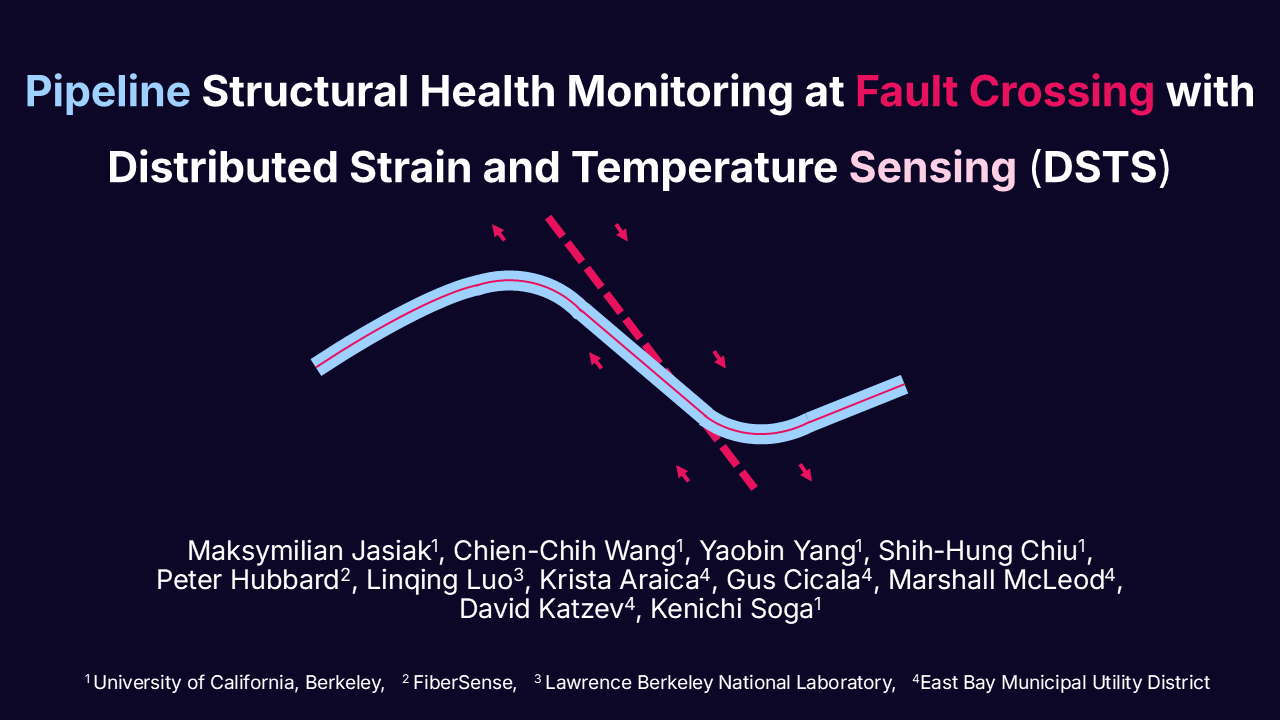
Maksymilian Jasiak and Shih-Hung Chiu presented “Pipeline Structural Health Monitoring at Fault Crossing with Distributed Strain and Temperature Sensing (DSTS)” at the 13th Water System Seismic Conference (November 19-21, 2025) hosted by National Taiwan University (NTU) in Taipei, Taiwan.
This work in collaboration with Peter Hubbard (FiberSense), Linqing Luo (Lawrence Berkeley National Laboratory) as well as Krista Araica, Gus Cicala, Marshall McLeod, David Katzev (East Bay Municipal Utility District) deploys a form of Distributed Fiber Optic Sensing (DFOS) to monitor the strain and temperature along pipelines crossing seismic faults. This collaboration enables long-term performance monitoring of lifeline water pipelines.
Key takeaways include:
- Distributed Strain and Temperature Sensing (DSTS) transforms fiber optic cables into long strain and temperature sensors
- Pipelines crossing active seismic faults experience annual deformations and elevated risk of damage during fault rupture
- DSTS advances pipeline structural health monitoring at fault crossings
Exciting work ahead to leverage DSTS for lifeline infrastructure monitoring!

Maksymilian Jasiak and Shih-Hung Chiu present at 13th WSSC at NTU in Taipei, Taiwan
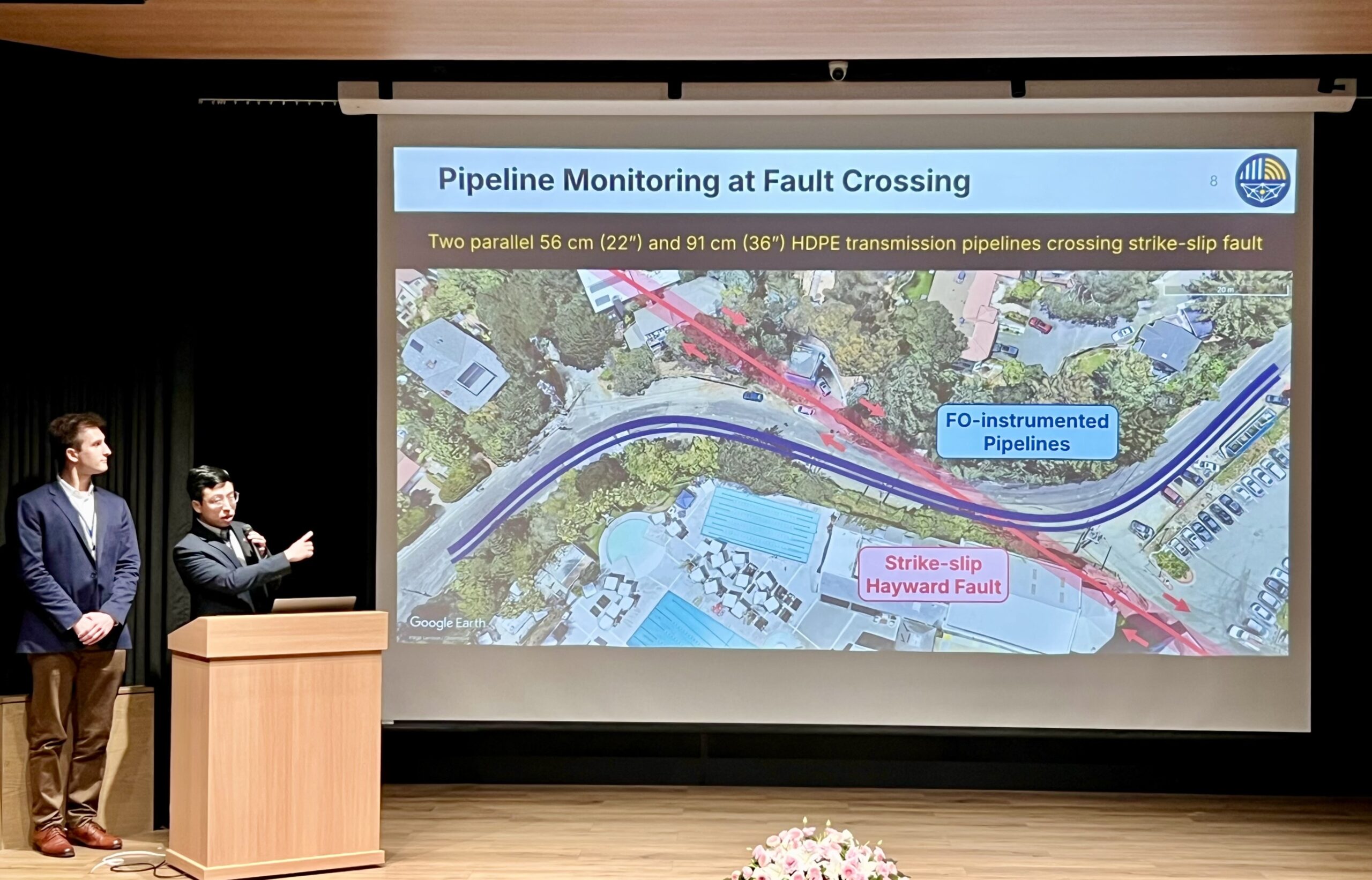
Shih-Hung Chiu presents at 13th WSSC at NTU in Taipei, Taiwan
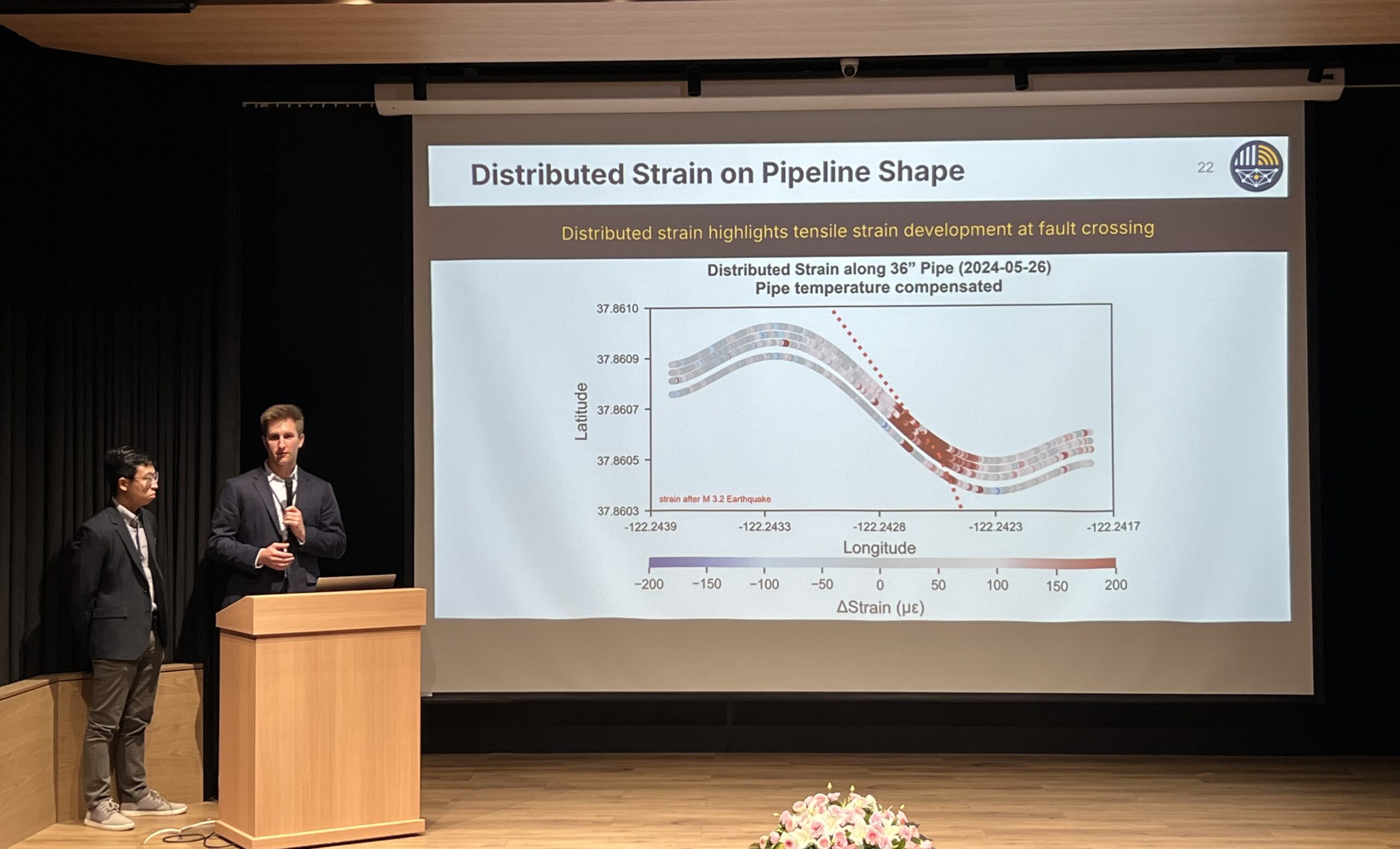
Maksymilian Jasiak presents at 13th WSSC at NTU in Taipei, Taiwan